Every society faces social challenges shaped by economic pressure, tradition, social expectations, and silence around sensitive topics. While these challenges affect communities as a whole, women and girls are often impacted more directly and more consistently, particularly within family life, education, health, relationships, and economic participation.
In many settings, including Pakistan, these issues are rarely visible as open injustice. More often, they exist quietly — through unequal expectations, limited choices, unrecognised labour, or the normalisation of sacrifice. In most cases, this occurs not because of ill intent, but due to long-standing practices and a lack of awareness about how everyday decisions affect women’s dignity and wellbeing.
Unlocking Voices approaches social issues by placing women’s lived experiences at the centre of reflection, while maintaining respect for faith, culture, and social harmony. The focus is
understanding — not blame — and balance rather than confrontation.
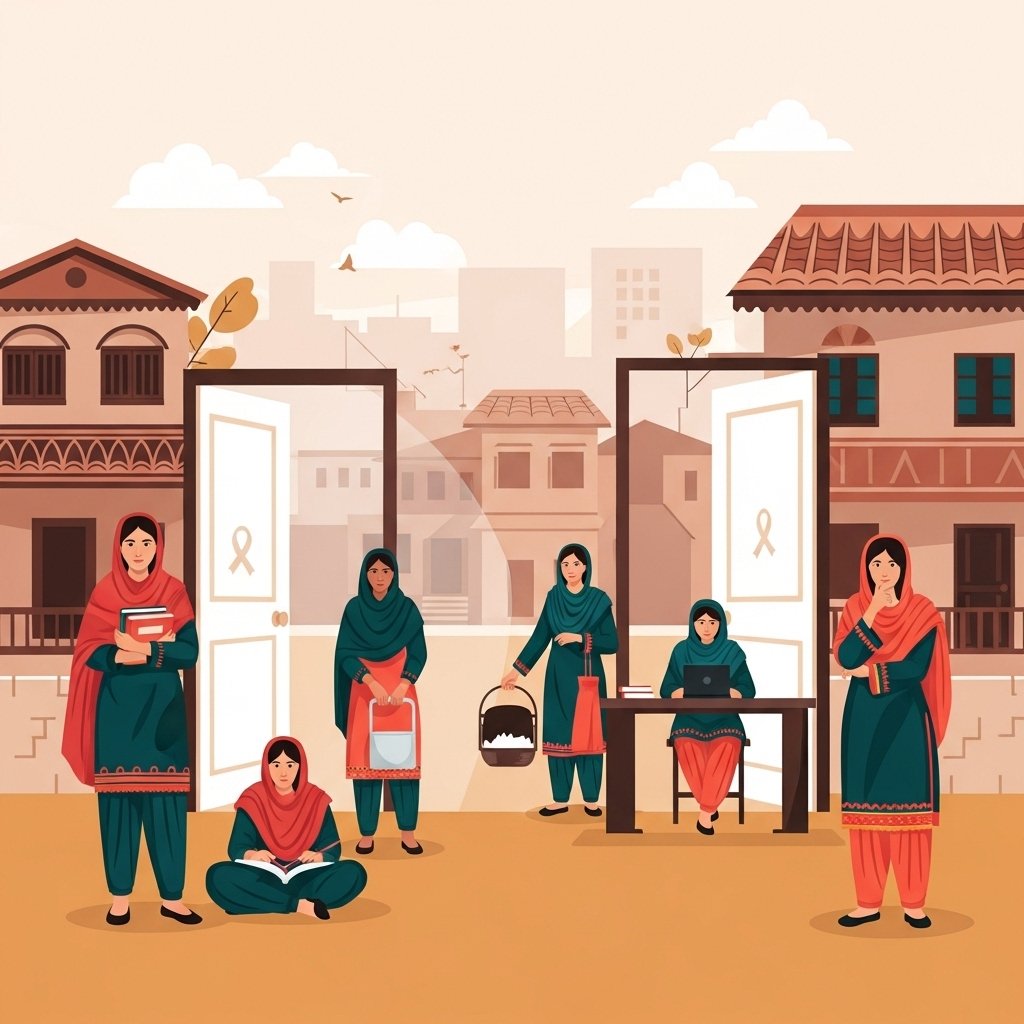
Families are the foundation of society, providing care, stability, and emotional support. Women often play a central role in sustaining family life through caregiving, emotional labour, and household responsibilities. Challenges arise when these responsibilities become unequal or invisible. Awareness encourages families to reflect on how roles, expectations, and decision-making affect women’s wellbeing. Healthier family environments are built through shared responsibility, mutual respect, and open communication.
Marriage is a valued institution that thrives on understanding, consent, and cooperation. For women, wellbeing within marriage is closely linked to being heard, respected, and supported emotionally and physically. Awareness supports thoughtful dialogue around readiness, consent, health, and mutual respect. These conversations strengthen relationships and help ensure that marriage remains a source of stability and dignity for everyone involved.
Education empowers women with confidence, skills, and the ability to make informed choices. When girls’ education is limited or interrupted, the effects often extend across generations. Awareness encourages communities to view women’s education as a shared investment — one that strengthens families, supports economic stability, and contributes to long-term social progress.
Women contribute to society in diverse ways — through paid employment, caregiving, household management, and emotional support. Many of these contributions remain undervalued despite their importance. Awareness promotes recognition, fairness, and balance. Acknowledging women’s contributions supports healthier relationships, reduces stress, and encourages appreciation within families and communities.
Women’s physical and emotional wellbeing are deeply interconnected. Social pressure, responsibility overload, and limited support can affect health over time. Awareness helps normalise conversations around stress, mental health, and self-care. When women feel supported and understood, families become more resilient and communities more compassionate.
Social norms shape daily behaviour, language, and opportunity. Over time, these norms may place quiet pressure on women, influencing their choices, self-expression, and confidence. Reflecting on everyday expectations encourages dignity and respect in daily interactions. Awareness allows societies to evolve thoughtfully while maintaining cultural and faith-based values.
Communities influence attitudes through families, education, leadership, and media. When women’s experiences are acknowledged respectfully, awareness spreads across generations. In Pakistan, collective understanding plays an important role in shaping balanced family relationships and social cohesion. Positive change grows through dialogue, listening, and shared responsibility.
Unlocking Voices focuses on awareness, not blame. It supports reflection, not confrontation, and promotes dialogue that respects faith, culture, and national identity. By examining social issues through the experiences of women, Unlocking Voices seeks to highlight concerns that are often overlooked or normalised. When women are heard and treated with dignity, families grow stronger and communities become more balanced and resilient. Awareness is the first step toward fairness — within homes, relationships, and society as a whole